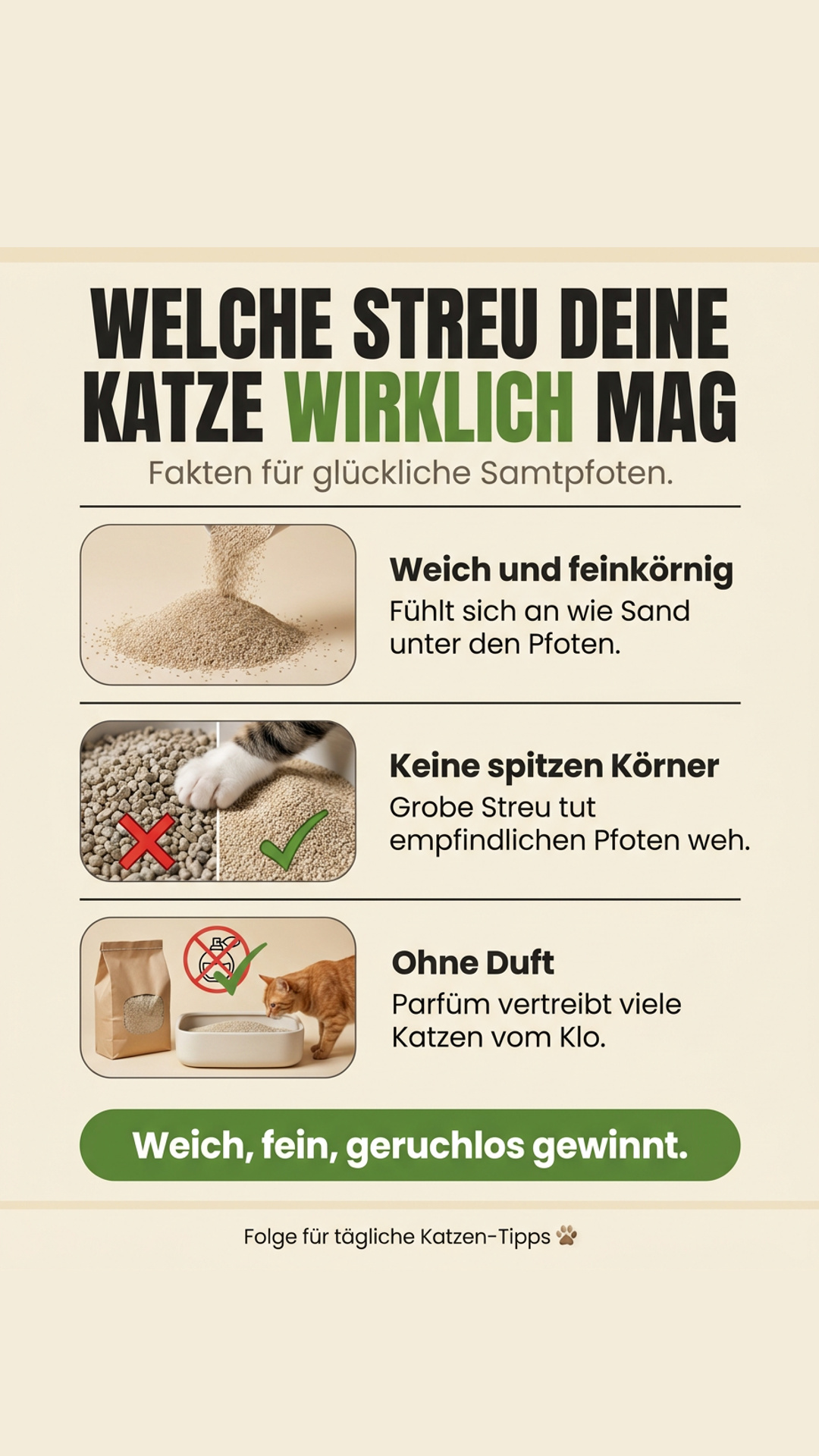
Cats want fine, soft, unscented clumping litter poured about three inches deep inside a spacious, uncovered box. Providing this exact bathroom environment solves most litter box avoidance issues and keeps your carpets safe from accidents. Your cat relies on instinct to choose a bathroom spot. Mimicking the soft desert sand of their ancestors keeps your feline companion comfortable and stress-free during their daily routines.
The Right Texture for Sensitive Paws
Feline ancestors buried their waste in fine desert sand. Your living room tiger retains this exact biological drive. Coarse wood pellets and sharp silica crystals poke into the sensitive pads of their feet. A painful bathroom visit prompts your cat to find a softer spot, like your laundry pile or the living room rug. Choose a fine-grained clumping litter to replicate that soft beach sand feel. This texture encourages natural digging and burying behaviors without causing discomfort. Clumping sand traps moisture on contact, making your daily scooping routine faster and more hygienic. Cats demand a clean bathroom environment. Keep the floor around the box tidy with a Double-Layer Honeycomb Cat Litter Mat | Waterproof & Easy Clean to catch stray grains before they track across your house.
Unscented Litter Prevents Box Avoidance
Humans love fresh lavender and pine scents. Cats possess highly sensitive noses, making that mild floral scent smell like a thick cloud of cheap perfume trapped in a small room. Artificial fragrances overwhelm their senses and drive them away from the litter box altogether. Buy unscented litter and rely on daily scooping to control odors. Skip the powdered deodorizers, scented sprays, and harsh chemical cleaners near the bathroom area. Wash the box with mild dish soap and warm water. Spoil your cat after a successful bathroom routine by offering a Rainbow EVA Pet Play Balls (3.5cm) instead of masking their bathroom with artificial smells.
Sizing and Setup for Feline Comfort
Buying the right sand solves half the problem. The physical box dictates the rest of the experience. Most standard pet store litter boxes lack the necessary space. Your cat needs a box at least one and a half times their body length to turn around and dig comfortably. Fill the fresh litter five to seven centimeters deep. Cats get frustrated by shallow litter because their claws hit the hard plastic bottom while trying to bury their waste. Avoid plastic box liners. Cats snag their claws on the thin plastic while scratching, creating an unpleasant texture and tearing the bag. Give your cat an open, uncovered box. Hooded boxes trap foul odors inside, forcing your cat to breathe in concentrated ammonia fumes. Treat your large feline to the Extra Large Stainless Steel Cat Litter Box with High Sided Enclosure, and leave the lid off to give them maximum turning space and fresh air.
How to Transition Safely
Cats hate sudden changes to their territory. Dumping their old litter and replacing it with a new brand invites immediate protest. Transition the litter over seven to ten days. Start by filling the box with a large base of the old litter and adding a thin top layer of the new fine-grained sand. Increase the ratio of the new litter a little bit every time you scoop and refill. Set up a litter buffet to find a definitive answer on your cat's preference. Place two identical boxes side by side. Fill one with their current litter and the other with the new unscented, fine clumping variety. Your cat will show you which one they prefer by choosing the more comfortable option. Keep the winning setup, and reward your happy kitty with some Interactive Grilled Fish Bone Cat Chew Toy with Silvervine to celebrate a successful bathroom upgrade.